Where's your money at?
January 22, 2026 9:42 PM
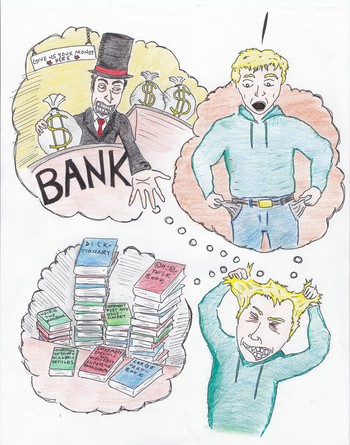
It’s that time of year again. Christmas presents have been bought and opened, new year’s resolutions have been made, and students’ bank accounts are empty.
The beginning of second semester is usually a big reality check for students when it comes to their limited funds. They now have to choose a night to go out where they can spend money on drinks, eat-in ALL the time, scrounge for used books, and figure out how to pay off Visa bills. This is not the ideal situation for any student, and for those who have balanced their money first semester, hats off to them.
A typical student comes to school in September with all the money they made during the summer, thinking they were rich. They don’t think twice when buying more food than necessary at the grocery store, buying a few too many drinks at the bar without thinking, and they definitely thought it was going to last the whole year. REALITY CHECK: they weren’t rich, they should have saved, and they are now broke.
Looking back on past spending habits does not help. It is time to set limits without resorting to being bound to the confines of home. The first step to balancing students’ money is to go over how much they actually have. This way students are able to make a budget by setting weekly limits for themselves, therefore making sure they have money throughout the entire semester.
Being able to budget a student’s income, or lack there of, enables them to know how much they can spend a week, and possibly make them realize they need to find a job to get through the semester.
Although getting a job isn’t always the ideal situation for a student during the school year, it is sometimes a necessary precaution so they are able to do the things we want without going into further debt.
How to save money
There are many different ways for students to save money on and off campus. One of the main spending habits for students is buying food.
Many students get too lazy to make food when there is a restaurant or fast food joint right around the corner. One way to cut down on spending is to go grocery shopping, buy cheap brand products, and make food at home. This enables students to not only eat healthier, but to minimize their spending on every meal of the day. Buying coffee at the grocery store also saves HUGE for those coffee drinkers. Buying coffee on campus gets expensive, so taking that extra five minutes in the morning to make coffee allows students to keep that extra change they have laying around. Bonus: if students go grocery shopping on Tuesdays, they get 10 per cent off at both Sobeys and Superstore.
Another major spending dilemma students have is on alcohol. Now obviously this is not to say that students should stop drinking and going out with friends. However, balance is necessary when it comes to spending. Some possible solutions for this spending habit is to only go out one night on the weekend. Only bring a limited amount of money out and LEAVE the Visa and debit card at home.
One of the positives to saving money in the ‘Nish is the lack of shopping opportunities. Rather than driving to Halifax to get that new outfit for Friday night, students should swap clothes with friends. This equates to new outfit for free, without having to drive over two hours to get it.
At the beginning of the semester, most students dread receiving their book list. Not many students want to spend over $500 on books they aren’t even interested in. One way to save some money when buying books is to buy used books.
The bookstore usually has a limited number of used books, so if getting there early is imperative. Students sell books around campus and online all the time. Look at posters around campus, or talk to friends who took the class before. This is a good way to find a textbook fora lower price.
How to make money
Another bonus of book selling is the money that can be made from doing so. This is an easy way to make back some money that was spent last semester. Therefore, textbooks that are just lying around can be capitalized on by putting some posters up or selling them online. Obviously getting a job this semester is a way for students to make back the money they spent first semester, or to live money-stress free for the next few months. A job can bring on other stresses in students’ busy schedules, but unfortunately if a student is in big debt, getting a job is necessary.
Although students come back in second semester with this massive amount of debt, there are different ways to manage the limited money that is in the bank, or make the money that isn’t. Creating a budget is a good first step in trying to manage debt, and the possibility of getting a job is always an option.