Want a byline? Better have a Y chromosome
March 11, 2026 3:28 PM
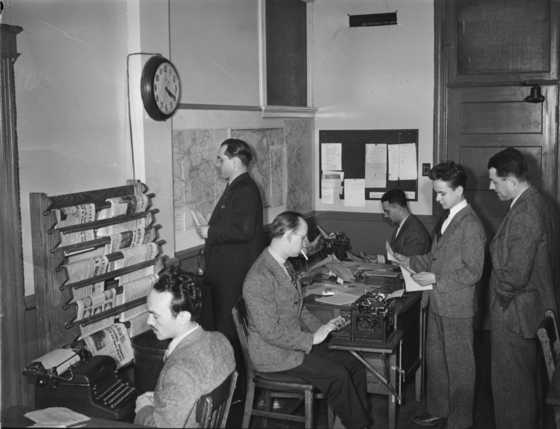
Women journalists and magazine writers have recently shown up as the subject of, rather than the producers of, news.
These stories should make us pause and consider what “progress” has actually been made in terms of equality.
Anne Hays, a journal editor and graduate student in New York, posted an open letter to the editors of the New Yorker on her Facebook page, which was quickly picked up by multiple news sources, including Jezebel, MS. Magazine, and the Village Voice, and subsequently went viral.
In the letter she called out the publication on the skewed gender ratio of its bylines. In two successive issues of the New Yorker Hays found, there were only two women’s bylines in the magazine; out of 15 or so major pieces in the magazine, two were written by women.
Hays sent back her copy of the New Yorker, and pledged to do the same with every subsequent issue without at least five pieces with bylines by women.
After all, she wrote, “Women are not actually a minority group, nor is there a shortage, in the world, of female writers…And so I am baffled, outraged, saddened, and a bit depressed that, though some would claim our country’s sexism problem ended in the late ’60s, the most prominent and respected literary magazine in the country can’t find space in its pages for women’s voices in the year 2011.”
This phenomenon is not restricted to the New Yorker. VIDA, an organization focused on promoting women in the literary arts, has actually calculated the relative contributions of men and women to many major literary magazines in the US.
To name a few titles that our library has on its shelves: The New Yorker, in 2010, published the work of 163 women writers, and 449 men.
The New Republic published 49 women and 256 men. Harper’s published 25 women and 94 men, and the Atlantic Monthly, 52 women and 158 men. Not a single magazine subjected to “The Count” came even close to parity.
Why? Is it as simple as blatant sexism, as Hays suggests?
Do women writers simply not want the instability and potentially lower pay grade of freelance work?
Or is this the ‘old boys’ club’ effect, where male editors assign stories to writers they already know: writers who are men.
Opinions of editors, at least the ones on Michael Enright’s excellent CBC panel regarding this issue, are mixed.
Some suspected some latent or unconscious sexism on the part of assigning editors; others maintained that it was an unavoidable consequence of an industry so reliant on networking.
One panelist posited that men dominated in opinion fields because women simply aren’t so interesting in “blowhardyism” (that one I’ll leave up for debate).
One editor, John MacFarlane of The Walrus, actually opined that some stories would simply be written better by one gender than another.
His example? He probably wouldn’t give an assignment on parenting to a man. Please let that sink in.
Let’s suppose for a minute that there are articles that simply shouldn’t be written by men: on parenting, and so, we may suppose, on housekeeping, or caring for aging parents, or sandwich-making.
Then what are the articles that shouldn’t be written by women, Mr. MacFarlane?
Articles on sports? Cars? Barbecuing?
What about war?
The role of women in combat zones or other places deemed ‘dangerous’ has always been a touchy one. “Getting the women and children out” still seems to be the priority when conflict hits.
At the same time, up-to-the-minute reporting from warzones, or, as we saw last month in Egypt, revolutionary protests, is vital and amazingly compelling work.
Lara Logan was covering the protests in Tahrir Square in February when she was separated from her camera crew and bodyguards and sexually assaulted.
When she spoke out about her assault - a hugely courageous step - the media responded with what Araminta Wordsworth in the National Post termed “a new rash of ‘blame the victim.’”
In her pointed article, Wordsworth compiles statements from other writers - men and women, left- and right- wing.
Most of them in some way accuse Logan of bringing her assault on herself: by being blonde, or beautiful, or Western, or simply going somewhere she shouldn’t go, by virtue of her being a woman.
This unbelievable reaction, which amounted in places to a cynical sneer of dark amusement, speaks to a sort of 1950s attitude that must run very deeply in the journalistic world: that some things, like women reporting on conflict, Simply Aren’t Done.
While this broken system is allowed to stand, is it any wonder that talented, curious, driven women writers will continue to opt out of the media game?
Should we be surprised, when all this is added up, that print journalism continues to be a man’s world?